Should my property management company have a maintenance department?There is no one right opinion
By Cliff Hockley With added commentary by Travis Buchanan
The article discusses the importance of maintenance operations for small property management companies. It highlights key lessons that small and mid-sized operators can learn from larger, institutional-scale maintenance programs. Featured by NARPM’s Residential Resource Magazine August 2026.
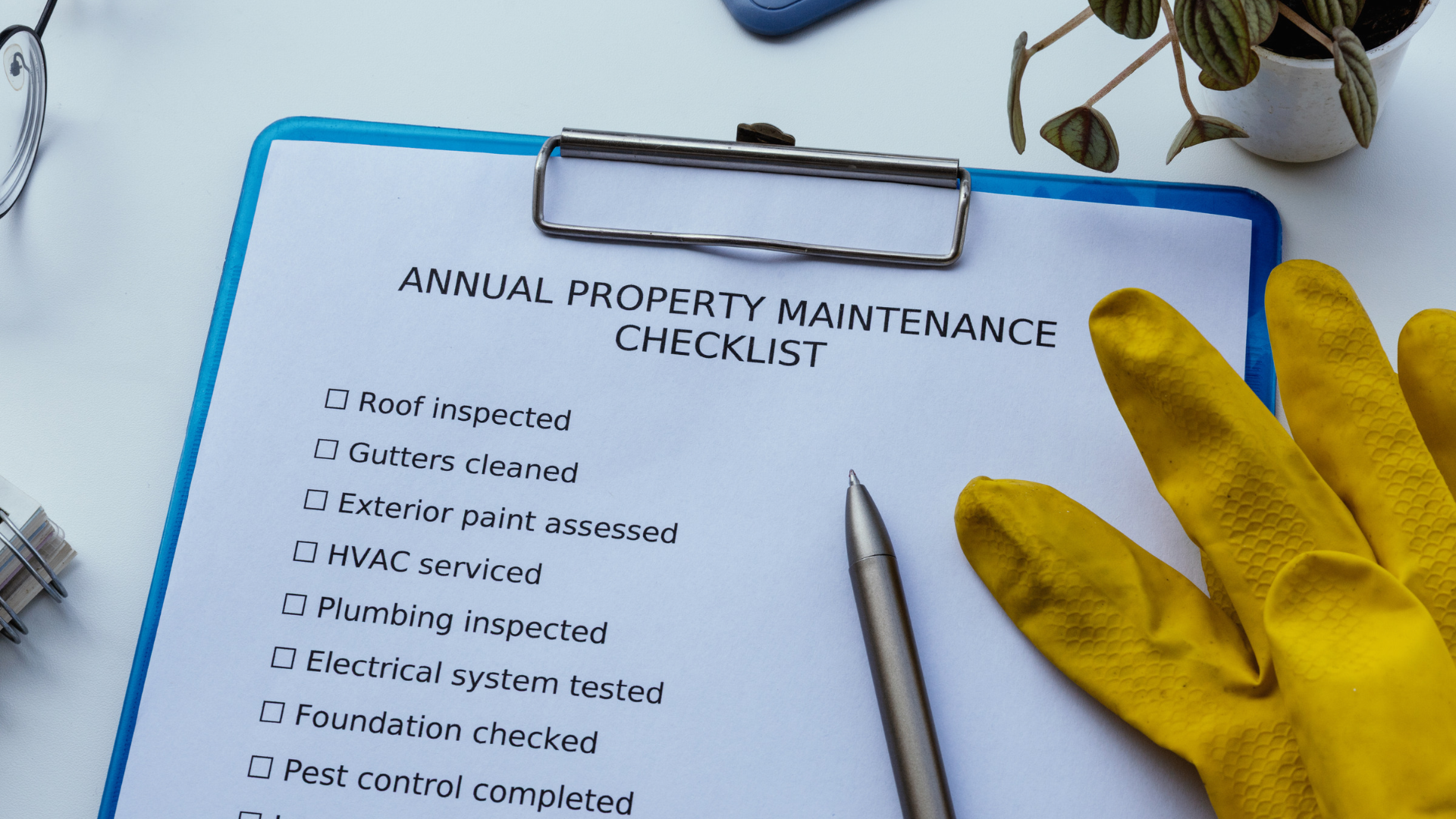
Having a successful property maintenance department depends on how much your clients are willing to pay for the service and if you can staff it correctly.
Small is beautiful
I was involved in managing a property maintenance department for over forty years. For the first twenty years we made money in our maintenance department. Then the leaders of the maintenance department (only four of them) retired and none of the next five department heads could help us make money. It seems that as long as we had a small department with a working manager, we made money, but once we added more than five technicians, we ran into trouble.
Workflow
As we grew staff and service call wise, we had to add a dispatcher and accounting help and the working manager became a full-time supervisor, we started getting financially choked. As our hourly prices increased to meet the challenge of keeping good technicians, we had problems getting enough work for them on a regular basis because the property managers thought our employees should cost less than contractors in the marketplace, and the workflow reduced.
Quality
As we added more technicians we also struggled with getting experienced staff. Which meant that some work was not completed correctly and had to be redone by someone else or a contractor and of course then we had to eat the additional cost. Once the property managers lost confidence in the quality of work being offered, we also struggled to get service calls from them.
The bottom line was quality work, and quality control was essential.
Larger vs smaller properties
If you have larger properties, or roaming commercial engineers with a set schedule You can make money with a preset workload, and full-time engineers and porters assigned to buildings. With roaming maintenance technicians it’s much harder to manage and forecast a consistent workload.
There are many additional challenges supervising maintenance employees in the field
Employees may take drugs
Speed, heroin, quaaludes, pain medicine
Employees have accidents
Auto accidents
Workers’ compensation injuries
Back injuries
Falling off roofs
Cutting wrist while installing linoleum
Employees can steal from you.
They can steal petty cash
They can ring up supplies for their own clients
They can work on their own clients instead of your clients’
Not all employees are honest.
They can steal time – taking naps in the field
Driving your vehicles out of town and gassing them up with your fuel card.
Employees don’t have enough experience
You have to constantly rework repairs started by your inexperienced technicians
Staff Landscapers and Painters
It’s hard to make money with landscapers and painters unless you have large properties and employ them full time. Again, it’s hard to get the timing right. They still need constant supervision, and your onsite property manager usually does not have time to do that.
Summary
Having your own property maintenance department is not a straightforward proposition.
It’s critical to have excellent experienced leadership to manage it for you, and these are very hard to find.
The biggest benefit to having your own maintenance team is that they can respond quickly to tenants’ needs and emergencies. Building a profitable department depends on the cash flow that properties have available for repairs.
The challenges include recruiting, training, safety, workers compensation issues, lack of technical skills, managing the constant turnover and dealing with required licensing requirements. If you have a maintenance department you will also see your business insurance expenses increase as maintenance companies and departments typically have higher loss run.
As another option, you can also have maintenance sub-contractors respond to the property emergencies and make money by marking up the service calls.
There are opportunities to make money, but it takes great leadership that can ensure that you have a quality team dedicated to their work, which also means they are well paid and have great benefits. The decision regarding starting and keeping an in-house maintenance department depends mostly on your property mix. With the wrong mix it might be better to subcontract your maintenance needs to established vendors and change a markup on every maintenance call.
Cliff Hockley Bio
Clifford A. Hockley is Principal Broker at SVN | Bluestone, as well as the managing member of Cliff Hockley Real Estate Consulting, LLC. As a Certified Property Manager & Designated Managing Broker, Cliff has 42 years of experience in the brokerage and management of Real Estate companies. Bluestone and Hockley Real Estate Services managed condominium associations, multi-family, and commercial properties in the greater Portland area. He was focused on running the company and involved with investment property brokerage. He worked with financial institutions, governmental agencies, private investors, and not for profit organizations. He also has vast knowledge in budgeting, organizational management, and building structures. His previous experience includes over five years in accounting, production supervision for a manufacturing company, and work for state agencies in California.
Cliff grew Bluestone and Hockley Real Estate Services into a 100 employee company that managed over 2 billion dollars of real estate assets before he sold the company in 2021. He also supervised a sales team of over 15 real estate brokers for over 35 years. His monthly newsletter, QuickFacts has over 2,300 subscribers. He has been involved in numerous real estate transactions that include industrial, retail, office, and multifamily properties. Cliff has also written a book called “Successful Real Estate Investing; Invest Wisely, Avoid Costly Mistakes and Make Money” published by Morgan James Publishing in 2019.
Cliff has successfully coached real estate investors and CEOs located throughout the United States since 2015. He has acted as a sounding board to help untangle knotty issues that need an experienced outside opinion. He guides leaders who find it is “lonely at the top” and need an experienced hand to help set a strategic direction, sort out operational problems and want to talk through challenging business decisions.
He has served as an adjunct professor at Portland State University from 2028 – 2021, teaching classes in: Intro to Real Estate, Basic Real Estate Finance, Property Management as well as Real Estate Investment Fundamentals. He has instructed hundreds of students and believes that substantial preparation and active student engagement are crucial for learning and appreciating the field of real estate. Students appreciate his candor and real-world experience.
Among his many civic activities, Cliff served on the Board of Directors for the Portland Chapter of the Institute of Real Estate Management (IREM) and the Rental Housing Alliance of Oregon. In 2014 he was recognized by IREM as board member of the year, and in 2015 he earned an achievement award in brokerage from SVN International. In the years 2000 & 2003, he was recognized by IREM as Certified Property Manager of the Year.
Another viewpoint for a larger portfolio of units – by Travis Buchanan
A Larger-Portfolio Perspective on Maintenance for Small Property Management Companies
By Travis Buchanan
At one point in my career, I worked with a platform that owned approximately 40,000 single-family rental homes. That scale gave us the opportunity to build an institutional-quality, nationwide maintenance operation from the ground up.
Most local and regional property management companies will never need — or want — to build something that large. But there are still valuable lessons small and mid-sized operators can borrow from a scaled maintenance program, especially if they are trying to improve response times, reduce vendor costs, increase resident satisfaction, and add operational control.
Maintenance is generally easier in larger multifamily properties because the units are concentrated in one location. Scattered single-family homes are much harder. Travel time, scheduling complexity, vendor coordination, inventory, and quality control all become more difficult. That said, even smaller property managers can benefit from thinking more systematically about maintenance.
1. Understand the Growth “No Man’s Land”
Like any business, maintenance operations hit painful inflection points as they grow.
At a certain size, an operator has to decide whether to push revenue first and stretch existing resources or hire ahead of growth and absorb the added cost. This is where many companies get stuck between “small is beautiful” and having enough scale to justify schedulers, lead technicians, vehicles, fleet management, inventory systems, software, and supervision.
The challenge is that these resources are often necessary before the economics are obvious. But without them, service quality can decline quickly. Work orders pile up, residents get frustrated, vendors become inconsistent, and owners start to lose confidence.
For small property managers, the key is not to overbuild too early, but to recognize when the business has outgrown informal processes.
2. Treat Maintenance Like Its Own Business
A maintenance team should be run as separately as possible from the core property management operation. In many ways, it should be treated like a third-party vendor — except with higher expectations.
That means tracking performance, measuring responsiveness, comparing pricing, and holding the team accountable for results. Internal maintenance should not automatically get every job simply because it is internal. If the team is not responsive, cost-effective, or producing high first-trip completion rates, it should be evaluated just like any outside vendor.
The benefit of having your own maintenance capability is control. But that control only creates value if the operation is managed professionally.
3. Build Systems Before Problems Become Expensive
As maintenance operations grow, more people, tools, vehicles, materials, and spending enter the system. With that comes the need for better guardrails.
Theft of time, money, supplies, and inventory is real. It is not always massive, but it can quietly erode profitability if no one is watching. In a larger operation, we built analytics tools that pulled spending by SKU into dashboards and flagged unusual activity. That helped identify issues such as technicians buying gift cards and using them personally.
We also used inventory management tools with auto-replenishment and required maintenance managers to conduct periodic and random inventory spot checks.
Small companies do not necessarily need enterprise software to start. But they do need basic controls: spending visibility, inventory tracking, approval thresholds, vendor comparisons, and some form of routine audit. These systems are not always expensive, but they do require discipline and organization.
4. Be Very Intentional About Technician Hiring
In my experience, technician quality is one of the biggest drivers of maintenance success.
Although more expensive, I would generally prefer hiring HVAC-certified technicians when possible. Strong HVAC technicians often have enough electrical, mechanical, and plumbing knowledge to solve a broad range of general maintenance problems. That versatility matters, especially in scattered-site property management where every trip to a property has a cost.
Hiring should be systematic. A good process should include structured interviews, technical testing, practical simulations, onboarding, shadowing, and ongoing quality checks. We used manager ride-alongs with detailed assessments and sent resident surveys immediately after work was completed. Residents were asked about competence, professionalism, friendliness, cleanliness, and whether the technician respected the home.
This may sound excessive, but maintenance technicians are often the only people your residents ever meet in person. They directly shape how residents feel about your company.
5. Use Tracking and Oversight Without Apology
Maintenance is an area where trust is important, but verification is essential.
Companies should have appropriate systems for technician scheduling, work order status, vehicle use, parts usage, and job completion. Fleet tracking, photo documentation, resident confirmation, and manager review can all help protect the business.
This is not about assuming the worst in people. It is about protecting residents, owners, technicians, and the company. Without clear systems, even good people can operate inconsistently, and bad behavior can go undetected for too long.
6. Stay Focused on the Highest-Value Work
For most small property management companies, I would not recommend bringing painting or landscaping in-house.
I have built and piloted both landscaping and painting crews in a larger institutional environment. They can work at significant scale, but they usually do not make sense for most local or regional operators. Labor management, equipment, scheduling, and quality control can become a distraction.
Instead, I would focus on the highest-frequency, highest-impact maintenance categories: electrical, plumbing, HVAC, doors, locks, and garage doors. In many rental portfolios, those categories represent a large percentage of total work orders and are the areas where speed and competence matter most.
The goal is not to perform everything. The goal is to control the work that most effects resident satisfaction, owner confidence, risk, and cost.
7. Maintenance Can Be a Profit Center and a Risk
Management Tool
A well-run maintenance operation can add profitability, but the financial margin is only part of the value.
Internal maintenance can also create better visibility into the condition of properties. Technicians become additional eyes in the field. They can spot deferred maintenance, resident-caused damage, safety issues, unauthorized pets, poor property conditions, or potential lease violations.
A strong maintenance team also gives the company flexibility. It can respond quickly to emergencies, reduce reliance on overpriced vendors, improve first-trip completion rates, and help prevent small issues from becoming expensive ones.
That value does not always show up neatly on a profit-and-loss statement, but it can be incredibly important.
Final Thought
For small property management companies, the goal should not be to recreate an institutional maintenance platform. The goal is to borrow the right lessons from one.
Start with the highest-impact work. Hire carefully. Track performance. Put basic controls in place. Treat the maintenance team like a real business unit. Compare it honestly against outside vendors. And, most importantly, make sure the operation is led by experienced maintenance supervisors who understand both the technical work and the service expectations of property management.
When done well, maintenance can become more than a necessary headache. It can become a competitive advantage.
Travis Buchanan Bio
Travis Buchanan is a residential real estate and property management operator with experience building and scaling platforms across public company, institutional, and high-growth private company environments. At American Homes 4 Rent, a publicly traded single-family rental company with approximately 65,000 homes, he gained experience inside one of the largest residential real estate operating platforms in the country. As COO of Poplar Homes, Travis helped lead the business through a period of rapid growth from roughly 1,500 to 15,000 homes, while building the company’s M&A function, leading the first several acquisitions and integrations, and scaling operations across maintenance, renewals, customer service, leasing, and other core departments.
Travis comes from a family with a 50-year history in commercial real estate in Southern California, including managing, financing, owning, and developing real estate assets. That background shaped his appreciation for real estate as both an operating business and a long-term value creation platform.
Beyond the operating work, Travis is driven by the idea that businesses are powerful vehicles for meaningful change. He believes strong companies should create environments where all stakeholders — team members, customers, residents, vendors, owners, investors, and communities — are better positioned to succeed. Travis lives in Las Vegas with his wife and three children.
If you need to grow your maintenance department we can help you get there. Contact us!